


CRISPR Gene Editing
In these days, in the world of genetic based medicine, CRISPR gene editing become one of the more powerful machines to improve human quality of life; CRISPR, a groundbreaking technology for gene editing, has the potential to revolutionize the world. This technology has taken the world by storm due to its unprecedented precision, power, speed, and targeted capabilities a unique combination not found in any other genome editing tool prior to the advent of CRISPR.
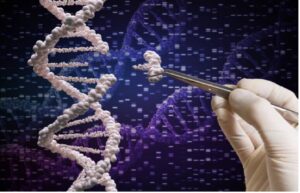
Imagine having a tiny pair of scissors that can precisely cut and paste specific sections of a very important instruction manual: the blueprint of life, or DNA. This is exactly what CRISPR (pronounced “cris-per”) technology allows scientists to do!
Inside of CRISPR lies a simple concept: it serves as a method to pinpoint a precise segment of DNA within a cell. Subsequently, the typical progression in CRISPR gene editing involves modifying this targeted DNA segment. Nonetheless, CRISPR has been repurposed to undertake additional functions, such as activating or deactivating genes without changing their genetic sequence.
This technology have had a huge impact on both science and medicine and due to this influence, CRISPR won the Nobel prize in 2020!
Where Do CRISPR Gene Editing Technology comes from?
History of CRISPR system have some good lessons in itself and can make new idea in your mind for your future research, so let’s go to know more about this technology.
Discovery of CRISPR as adaptive immune system – 1993 – 2005
Maybe the origin of this technology is University of Alicante, Spain, in the Francisco Mojica lab, which was the first researcher, in this field, which later called CRISPR. He has been working on Archea and their genome from 1990s and his paper in 1993, was an introduction about regulatory elements which flanked by palindromic sequences.
Later in 2000, he released a paper, where he identified that the previously thought mismatched repetitive sequences actually possessed a collective set of features, which are now referred to as CRISPR sequence signatures.
In 2005, he published a paper that these patterns correlated with sections found in the genetic material of bacteriophages. This discovery prompted him to propose the accurate theory that CRISPR functions as an adaptive immune system in Archea and bacteria.
Naming CRISPR to this technology – 2002
The name of CRISPR to this technology is done by Ruud Jansen, Utrecht University, in 2002. He found direct repeats in different sizes, 21-37 bp, interspaced by similarly sized non-repetitive sequences. Thus, he named this sequences Clustered Regularly Interspaced Short Palindromic Repeats (CRISPR), and he told to world there are mobile genetic elements because of their presence in multiple chromosomal loci.
Discovery of Cas9 and PAM
Bolotin was examining the recently sequenced bacteria, identifying a unique CRISPR locus. While the CRISPR array bore resemblance to existing systems, it differed by omitting certain known cas genes and introducing new cas genes, with one encoding a sizeable protein suspected to possess nuclease capabilities – later identified as Cas9. Additionally, they observed that the spacers, showing similarity to viral genes, all possessed a common sequence at one end known as the Protospacer Adjacent Motif (PAM), crucial for target recognition.
Impacts of CRISPR in Adaptive Immunity
This idea, CRISPR and adaptive immune system, comes from yogurt! Streptococcus thermophilus is extensively utilized in the dairy sector for producing yogurt and cheese. Researchers at Danisco aimed to investigate its response to phage attack, a common issue in industrial yogurt production. Through their experimental work, Horvath and team demonstrated the adaptive nature of CRISPR systems. They illustrated that these systems incorporate new phage DNA into the CRISPR array, enabling the organism to combat subsequent phage attacks effectively, this research published 2007 by Barrangou. Additionally, they indicated that Cas9 is likely the sole protein essential for interference, the mechanism through which the CRISPR system deactivates invading phages, with specific operational details remaining unidentified.
Where gRNA comes from?
2008 was when scientists were looking to understand how CRISPR reads through the phage genome and recognizes it. It was here that a scientist named John van der Oost published an article in which he stated that the spacer sequences in E. coli, which originate from the phage, are transcribed into small RNA sequences called Crispr RNA (crRNA). The presence of this sequence causes the Cas protein to be called to a region of the bacteriophage DNA genome that has a spacer sequence.
Cas9 cleaves target DNA by double strand break (DSB)
Discovering the disruption mechanism and focusing on DNA instead of RNA was a major breakthrough in 2008. Although many initially attributed CRISPR to RNA silencing, similar to eukaryotic mechanisms, their research revealed that DNA is the target. They highlighted the system and its potential for applications beyond bacteria, unlike a different CRISPR system that targets RNA.
In 2010, Moineau and coworkers revealed that CRISPR-Cas9 induces precise double-strand breaks in the target DNA, exactly three nucleotides before the PAM site. Their work identified Cas9 as the only protein responsible for cleaving the CRISPR-Cas9 system, a defining feature of type II CRISPR systems where disruption is promoted by a single large protein (specifically Cas9) together with crRNAs.
Discovery of tracrRNA for Cas9 system, final peace of puzzle in the mechanism of CRISPR
In understanding the mechanism behind the natural disruption of the last missing element, CRISPR-Cas9, Emmanuelle Charpentier and Jennifer Doudna; a team by performing small RNA sequencing on Streptococcus pyogenes, which has a CAS9-containing CRISPR-Cas system, they revealed the presence of another small RNA in addition to crRNA, which they named transactivating CRISPR RNA (tracrRNA). Their research showed that tracrRNA pairs with crRNA to form a duplex that serves to target Cas9.
CRISPR as a Genome Editing Tool
Charpentier and Doudna discovered that combining crRNA and tracrRNA can lead to a single artificial guide that further streamlines the system. In 2012, they published a paper in Science magazine, A Programmable Dual-RNA–Guided DNA Endonuclease in Adaptive Bacterial Immunity. Their research indicates the discovery of a group of endonucleases that employ two RNAs for precise cutting of DNA at specific locations. This also emphasizes the opportunity to utilize this system for genome editing that is programmable through RNA.
At Scarless Therapeutics we are aiming to use this technology to cure diseases. At the next step of this blog post, you will learn about the CRISPR Mechanism of action.
Stay with us…